


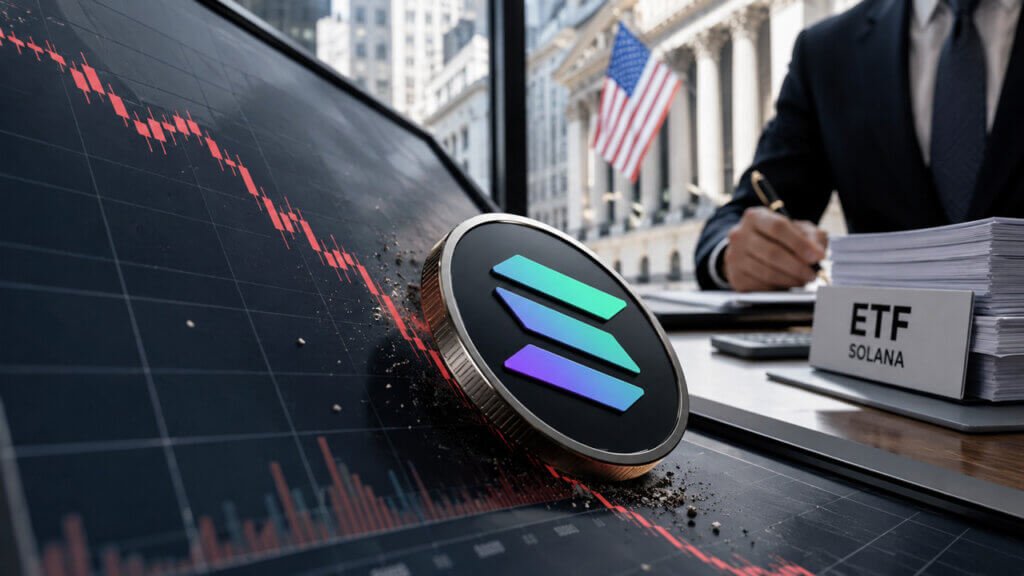
Solana’s Price Action Is Sending a Mixed Signal
Solana is facing a confusing moment in the crypto market. On one side, institutional interest appears strong, ETF-related inflows are improving, and the Solana ecosystem remains one of the most active networks in crypto. On the other side, SOL’s price is still falling, leaving traders asking why good news is not turning into a stronger rally.
This kind of price action shows that market flows do not always tell the full story. ETF inflows can support long-term confidence, but they do not automatically remove short-term selling pressure. If spot traders are selling, leverage is being flushed out, or broader crypto sentiment is weak, Solana can still fall even while institutional products attract money.
The main issue is that Solana is no longer moving only on hype. It is now being judged like a major crypto asset. Investors want proof of sustainable demand, stronger liquidity, and real buying pressure in the spot market. Until that appears clearly, ETF inflows may not be enough to stop the decline.
ETF Inflows Are Positive, But They Are Not Everything
ETF inflows are usually seen as bullish because they suggest that investors are adding exposure through regulated products. For Solana, this can support the long-term adoption story. More institutional access means more visibility, more legitimacy, and potentially more demand over time.
But ETF inflows can also be misunderstood. They do not always mean that price must immediately rise. If the inflows are small compared with selling pressure in the open market, their impact can be limited. A few days of positive ETF demand may not be strong enough to offset whales, profit-taking, futures liquidations, or weak retail sentiment.
This is why traders should not look at ETF data alone. The stronger question is whether ETF inflows are large enough to change Solana’s overall supply-demand balance. If they are not, SOL can still move lower.
Spot Selling Is Pressuring SOL
One of the biggest reasons Solana can fall despite inflows is spot selling. When holders sell directly into the market, that selling can overpower ETF demand, especially during periods of low liquidity.
Some investors may be taking profits after previous rallies. Others may be reducing risk because Bitcoin and Ethereum are also under pressure. When the broader crypto market weakens, traders often sell altcoins first because they are more volatile.
Solana is one of the most liquid and widely traded altcoins, which means it can become a quick source of cash for funds and active traders. If they need to reduce exposure, SOL is one of the assets they can sell easily. That liquidity is useful in bull markets, but it can also increase selling pressure during corrections.
Leverage Is Making the Drop Worse
Another factor is leverage. Solana often attracts aggressive futures trading because it moves quickly and has strong retail interest. When traders build large long positions and the price starts falling, liquidations can accelerate the move.
This creates a chain reaction. Price drops trigger liquidations, liquidations create forced selling, and forced selling pushes price even lower. In that environment, positive ETF inflows may not matter much in the short term because futures pressure is controlling the market.
A healthy recovery usually needs leverage to reset first. Once overextended long positions are cleared out, Solana has a better chance of building a stable base. But until then, every bounce can face selling from traders who are trying to exit.
Broader Crypto Weakness Is Hurting Solana
Solana does not trade in isolation. If Bitcoin is weak, Ethereum is struggling, and investors are moving away from risk assets, SOL will usually feel the pressure too.
Altcoins often need a strong market environment to perform well. When liquidity is tight or investors become defensive, they usually prefer Bitcoin, stablecoins, or cash. This reduces demand for high-beta assets like Solana.
Even if Solana has its own positive stories, the broader market can still drag it down. ETF inflows may help the long-term thesis, but they cannot completely protect SOL from a weak crypto cycle.
The Market Wants Stronger Proof
The current weakness also shows that investors may want more proof before pricing Solana higher. The network has strong activity, a loyal developer base, meme coin trading, DeFi growth, and rising institutional attention. But the market may be asking whether all of that activity can translate into sustainable value for SOL holders.
This is an important shift. In earlier phases, Solana could rally strongly on ecosystem excitement alone. Now, traders are watching revenue, network fees, liquidity, institutional flows, and competition from Ethereum and other chains.
If Solana’s network activity remains strong but SOL price keeps falling, investors may start questioning whether usage is enough to support valuation. That does not mean Solana is weak as a network. It means the token still needs clear demand from buyers.
Profit-Taking After Big Expectations
Solana has been one of the most watched altcoins because of ETF hopes and institutional attention. Sometimes, when expectations become too high, the market sells the news instead of buying it.
Traders may have already bought SOL before ETF inflows appeared. Once the positive headlines arrive, they use the liquidity to exit positions. This can make the price fall even when the news looks bullish.
This is common in crypto. Markets often move ahead of events, and by the time the event becomes public, much of the bullish expectation is already priced in. If new demand is not strong enough to continue the move, the price can reverse.
What Solana Needs to Recover
For Solana to recover, ETF inflows need to become stronger and more consistent. A few positive inflow days are helpful, but traders need to see sustained demand that can absorb selling pressure.
SOL also needs better spot market strength. That means buyers must defend key support levels and push price higher without relying only on leverage. A strong recovery should come with improving volume, reduced liquidations, and healthier market structure.
Broader crypto sentiment also matters. If Bitcoin stabilizes and risk appetite returns, Solana could recover faster because it remains one of the leading altcoins. But if the market stays weak, SOL may continue to struggle even with ETF support.
Final Thoughts
Solana is falling despite ETF inflows because inflows alone are not enough to control the whole market. Spot selling, leverage liquidations, profit-taking, weak crypto sentiment, and doubts about short-term demand are all weighing on SOL.
The long-term story for Solana remains strong because institutional interest, network activity, and ETF access continue to improve. But the short-term market is focused on liquidity and real buying power.
For SOL to regain confidence, investors need to see ETF inflows turn into stronger price support. Until then, Solana may remain under pressure even while the institutional narrative looks positive.
FAQs
Why is Solana falling despite ETF inflows?
Solana is falling because ETF inflows may not be strong enough to offset spot selling, leverage liquidations, profit-taking, and weak broader crypto sentiment.
Are Solana ETF inflows bullish?
Yes, ETF inflows are bullish for long-term adoption, but they do not guarantee an immediate price increase if market selling pressure is stronger.
Is Solana still strong fundamentally?
Solana still has strong network activity, developer interest, and institutional attention. However, the market wants clearer proof that this activity can support SOL’s price.
Can SOL recover soon?
SOL can recover if ETF inflows remain consistent, Bitcoin stabilizes, leverage resets, and buyers return to the spot market.
Is this drop bad for Solana long term?
Not necessarily. Short-term price drops are common in crypto. The long-term outlook depends on whether Solana continues to grow usage, liquidity, and institutional demand.