


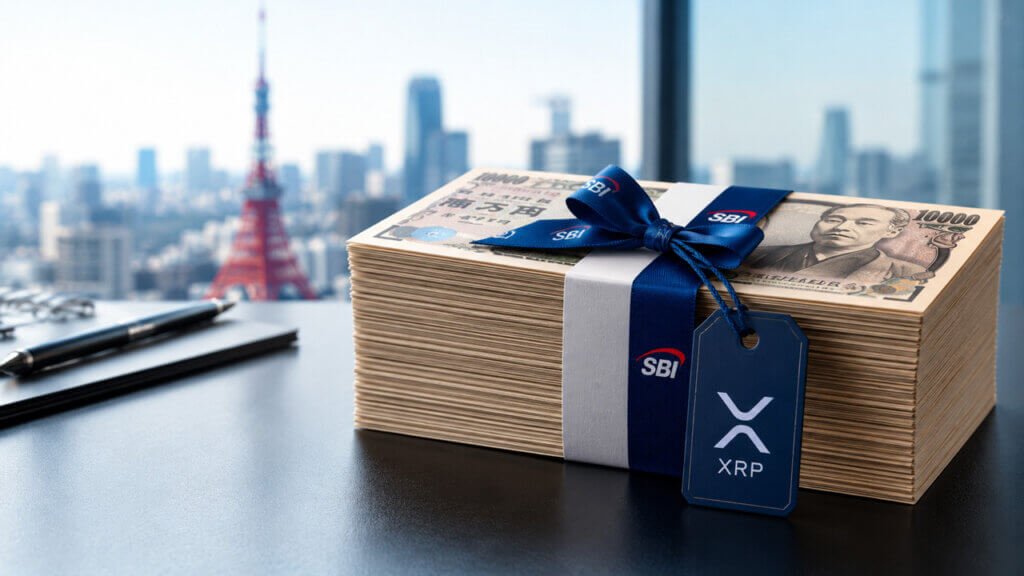
SBI Turns XRP Into a Banking Reward Tool
Japan’s SBI is using XRP in a way that shows how crypto can move beyond trading and become part of traditional banking strategy. Instead of presenting XRP only as a speculative asset, SBI Shinsei Bank is using crypto vouchers as a reward tool for deposit customers.
The idea is simple but important. Customers who keep money in certain yen deposit products can receive crypto vouchers connected to assets like XRP, Bitcoin, and Ethereum. These vouchers are not just a bonus for customers. They are also a smart way for SBI to make deposits more attractive at a time when Japanese savers have more options than before.
For years, Japanese banks benefited from very low interest rates. Customers had little reason to move money because savings accounts everywhere offered low returns. But that environment is changing. As rates rise and investment alternatives become more attractive, banks need new ways to keep customers interested. SBI’s answer is to use XRP and crypto rewards as a modern loyalty layer.
Why This Is Really About Deposits
At first look, the campaign may seem like a crypto promotion. But the deeper story is about deposits. Banks rely on deposits because they are a cheap and stable source of funding. When customers leave their money in a bank, that bank gains more flexibility to lend, invest, and grow its financial products.
The problem is that savers are no longer as passive as they were during Japan’s long period of near-zero rates. If customers can earn better returns elsewhere, banks must work harder to keep them. That is where SBI’s crypto voucher strategy becomes interesting.
Instead of simply raising deposit rates across the board, SBI can offer a reward that feels more exciting to customers but may cost less than a major rate increase. A small XRP voucher can create more attention than a small interest-rate improvement, especially among younger or crypto-curious savers.
This makes XRP a marketing tool, a retention tool, and a bridge into SBI’s wider crypto ecosystem.
How the XRP Voucher Strategy Works
The campaign connects traditional deposits with crypto rewards. Customers place money into eligible banking products, and they may receive vouchers that can be redeemed through SBI VC Trade, the group’s crypto exchange platform.
This structure matters because it does not require the bank to turn deposits directly into crypto. The customer still keeps money in yen deposits, while the crypto reward sits as an additional benefit. That makes the product easier to explain and easier to control from a banking point of view.
For SBI, the benefit is even bigger. A customer who wants to redeem the crypto reward may need to interact with SBI VC Trade. That means the bank is not only protecting deposits; it is also pushing customers toward another business inside the same group.
In simple words, SBI is using bank deposits to feed its crypto exchange ecosystem. XRP becomes the hook that encourages customers to take the next step.
Why XRP Is Important in This Campaign
XRP has a long connection with SBI. The Japanese financial group has been one of Ripple’s strongest partners in Asia, and SBI has often supported XRP-related products and services. That history makes XRP a natural choice for reward campaigns.
For customers, XRP is also easier to recognize than many smaller crypto assets. It has strong branding, high liquidity, and a clear history in payment and banking discussions. That makes it useful for a bank trying to introduce crypto rewards without making the product feel too risky or confusing.
But this does not mean the campaign is only about XRP price demand. The vouchers are more about customer behavior than token speculation. SBI wants depositors to feel that staying with the bank gives them access to something extra. XRP provides that extra layer of interest.
If customers redeem the vouchers and begin using SBI VC Trade, the campaign becomes more valuable. If they ignore the vouchers, it remains a limited promotion.
A New Type of Banking Competition
SBI’s strategy shows how banking competition is changing. Banks are no longer competing only with other banks. They are also competing with investment apps, securities platforms, crypto exchanges, and tax-friendly investment accounts.
In this environment, a bank must do more than offer a basic savings account. It needs to keep the customer inside its financial ecosystem. That means offering banking, investing, payments, and digital assets under one group.
Crypto vouchers fit perfectly into that strategy. They make a traditional deposit account feel more modern without completely changing the banking product. Customers still see the safety and familiarity of a bank account, but they also get the excitement of crypto exposure.
This could become a model for other financial institutions if the campaign works.
Why This Could Matter for Crypto Adoption
The biggest impact may not come from the size of the vouchers. It may come from the way crypto is introduced to ordinary banking customers.
Many people still avoid crypto because they think it is too complicated. They do not want to open an exchange account, manage wallets, or study blockchain technology. But if crypto appears as a simple reward from a bank, it becomes less intimidating.
That is important for adoption. When crypto enters everyday financial products, it becomes easier for conservative users to test it. They may begin with a small voucher and later explore buying, selling, or holding crypto directly.
For XRP, this gives the token another real-world role inside a regulated financial setting. It may not create massive demand immediately, but it strengthens the idea that XRP can be used as part of banking-related products.
The Risk for SBI
The main risk is that customers may not care enough. If the crypto voucher is too small, many depositors may see it as a minor bonus rather than a reason to stay with the bank. Conservative savers may also prefer cash rewards over crypto exposure.
There is also the issue of volatility. If customers redeem XRP and the price falls, the experience may feel disappointing. That could limit the campaign’s appeal among people who are not already interested in crypto.
SBI must balance excitement with trust. The campaign needs to feel innovative, but not too risky. That balance is important because banks cannot behave like pure crypto startups. They must protect their reputation and maintain customer confidence.
What It Means for XRP
For XRP supporters, SBI’s campaign is a positive signal because it shows continued institutional use of the token inside Japan’s financial sector. It also proves that XRP can be positioned as more than a trading asset.
However, investors should not overstate the short-term price impact. A voucher campaign is not the same as a major payment network adoption or large-scale institutional settlement demand. It is a customer acquisition and retention strategy first.
Still, the long-term message is useful. If banks can use crypto rewards to keep customers engaged, XRP may continue to appear in more financial products, especially in markets where SBI and Ripple have strong relationships.
Final Thoughts
Japan’s SBI is using XRP to solve a very traditional banking problem: how to keep deposits sticky when customers have more financial choices.
The crypto voucher campaign gives SBI a way to make ordinary yen deposits feel more attractive without turning the whole product into a crypto account. XRP works as the visible reward, while the real goal is deposit retention, customer engagement, and growth for SBI VC Trade.
This is not just a crypto story. It is a banking strategy story. SBI is showing how digital assets can be used as loyalty tools inside traditional finance. If customers respond positively, XRP could become part of a wider trend where banks use crypto rewards to defend deposits and bring users into broader financial ecosystems.
FAQs
Why is SBI using XRP for banking rewards?
SBI is using XRP as part of a crypto voucher reward strategy to make deposit products more attractive and encourage customers to engage with SBI VC Trade.
Is SBI giving customers XRP directly?
Customers receive crypto vouchers that can be redeemed through SBI VC Trade. The reward can give exposure to crypto assets like XRP, Bitcoin, and Ethereum.
Why does this matter for banks?
It matters because banks need new ways to keep deposits as savers get more investment options. Crypto rewards can make traditional deposit products feel more attractive.
Can this increase XRP adoption?
Yes, it can support XRP adoption by introducing the token to banking customers in a simple reward format. However, the short-term market impact may be limited.
Is this bullish for XRP?
It is positive for XRP’s real-world visibility, especially in Japan’s banking sector. But investors should not treat it as a guaranteed price catalyst because the campaign is mainly focused on customer retention and exchange onboarding.