


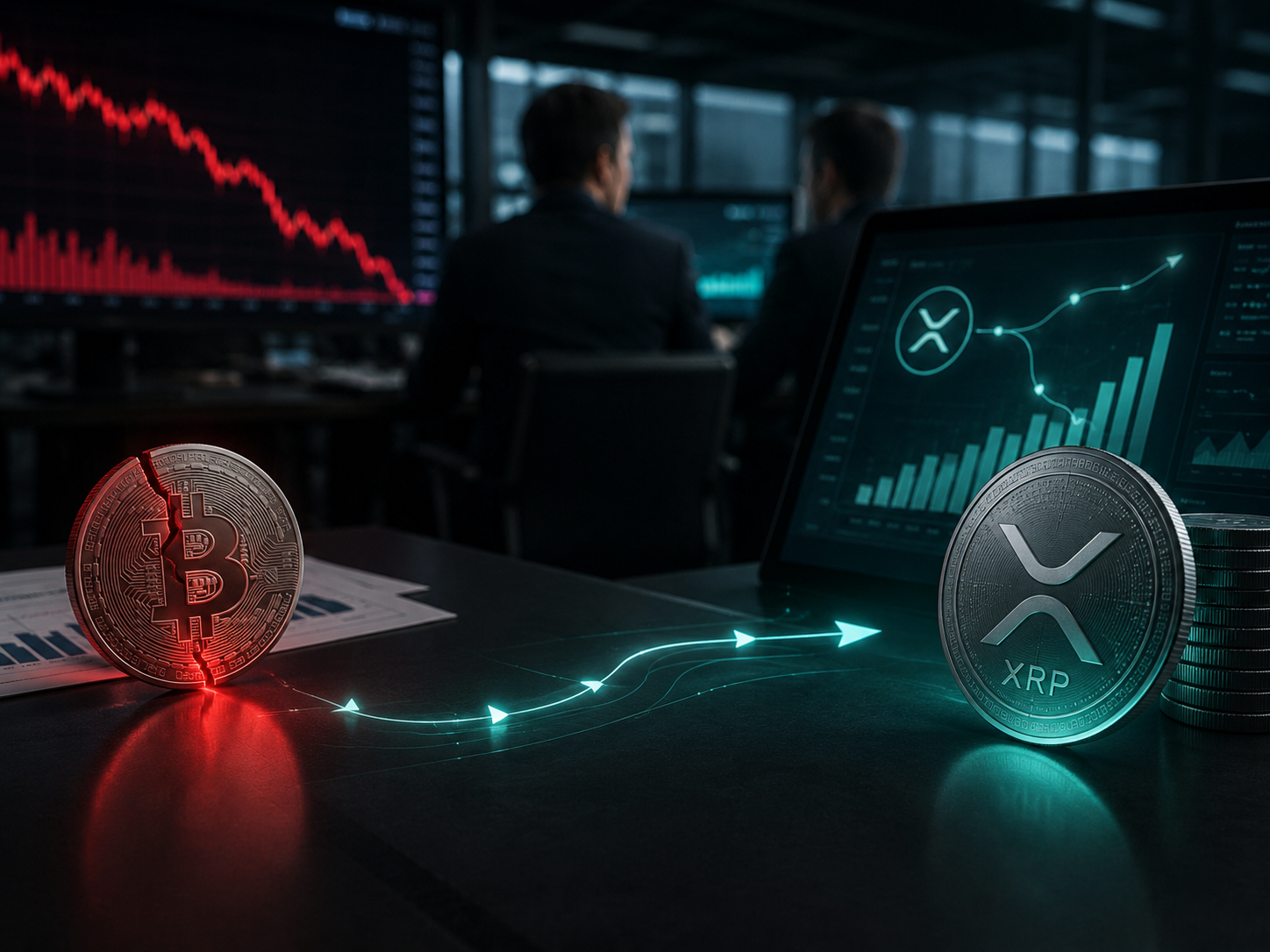
XRP Stands Apart in a Weak Crypto Market
The crypto market is once again facing heavy pressure, with Bitcoin and Ethereum struggling under the weight of institutional outflows, macro uncertainty, and weak investor confidence. Bitcoin’s drop below key psychological levels has created fear across the market, but XRP is showing a different kind of resilience. While XRP has also seen price weakness, the broader sentiment around the Ripple-linked asset appears far less negative than the mood surrounding Bitcoin and Ethereum. The reason is not simply price action, but a deeper shift in institutional behavior, where large investors are beginning to view Ripple’s ecosystem as a more practical bridge between traditional finance and regulated blockchain infrastructure.
Bitcoin Weakness Creates a New Market Divide
Bitcoin is often treated as the main liquidity asset in crypto portfolios, which means institutions may sell it first when market conditions become stressful. The recent downturn has exposed that weakness, as Bitcoin and Ethereum ETFs have faced sustained outflows while investors move toward cash and lower-risk positions. The report notes that US spot Bitcoin ETFs recorded three consecutive months of outflo(CryptoSlate), and this pressure has helped drag the wider market lower. XRP, however, is not being judged only as another altcoin following Bitcoin’s direction. It is increasingly being priced around its own catalysts, especially institutional access, regulated investment products, and Ripple’s expanding financial infrastructure.
XRP ETFs Signal Institutional Interest
One of the clearest signs of this shift is the difference between ETF flows. While Bitcoin and Ethereum products have faced heavy selling, XRP ETFs have reportedly attracted around $1.3 billion in inflows since launching in November, with fewer than five net outflow days since debut. That contrast matters because it suggests institutions are not simply abandoning crypto altogether. Instead, they may be rotating toward assets that offer a clearer market-structure story. XRP’s investment case is becoming less about speculative hype and more about access to regulated rails, settlement use cases, and infrastructure that traditional financial firms can understand.
Ripple Builds Toward Institutional DeFi
Ripple’s recent ecosystem moves are strengthening this institutional narrative. Ripple Prime’s support for Hyperliquid was described as a way for institutional clients to access on-chain derivatives liquidity through a prime-broker-style interface. That kind of structure matters because institutions are used to consolidated access, margin management, and risk controls rather than fragmented DeFi platforms. Ripple is trying to make blockchain liquidity look more familiar to professional capital, which could help XRP stand apart during a period when many tokens are being treated as high-risk beta plays.
Permissioned Domains Add a Compliance Layer
Another major development is the activation of Permissioned Domains on the XRP Ledger mainnet. These controlled environments can restrict access to certain features through credentialing, effectively creating a compliance-focused layer for on-chain activity. This is important because many institutions cannot participate in open DeFi markets without clear rules around counterparties, identity, and regulatory exposure. By building permissioned infrastructure, Ripple is positioning XRPL as a possible venue for tokenized real-world assets, regulated liquidity, and cross-border settlement flows. This does not guarantee immediate demand for XRP, but it gives investors a stronger reason to separate XRP from the broader altcoin market.
Derivatives Show a Market Reset
The derivatives market also helps explain why XRP sentiment has remained comparatively stronger. Bitcoin has faced a major leverage flush, with more than $3 billion in recent liquidations during the slump, while XRP open interest on Binance reportedly dropped to $405.9 million, its lowest level since November 2024. A decline in open interest can be painful in the short term, but it can also reset the market by removing excessive leverage. At the same time, XRP options activity has been heavily skewed toward calls, suggesting traders are looking for upside exposure without aggressively buying spot during market weakness.
Regulation Turns from Risk to Catalyst
XRP’s long-running regulatory discount has also started to change. After years of legal uncertainty, the resolution of the SEC case against Ripple helped shift the conversation from courtroom risk to financial infrastructure. Since then, Ripple has continued expanding its presence in traditional finance, while RLUSD, its stablecoin, has reportedly grown to more than $1.4 billion in supply. This combination of regulatory clarity, stablecoin growth, permissioned trading infrastructure, and institutional-facing products gives XRP a different narrative from assets that are still heavily dependent on speculative momentum.
What Comes Next for XRP?
The future of XRP depends on whether Ripple’s infrastructure can turn institutional interest into sustained usage. In a base-case scenario, XRP may continue holding a relative premium if risk assets stabilize and investors keep rewarding its regulated-market narrative. In a stronger bull case, permissioned XRPL infrastructure and Ripple Prime connectivity could help position XRP as part of a serious institutional settlement and liquidity network. The risk is that macro pressure remains too strong, ETF outflows continue across crypto, or institutional adoption takes longer than expected. For now, though, XRP is showing that not every crypto asset is being treated the same during Bitcoin’s collapse. Its defiance comes from a quiet but meaningful shift in capital, infrastructure, and institutional expectations.
FAQs
Why is XRP performing differently from Bitcoin?
XRP is being supported by a different narrative than Bitcoin. While Bitcoin is facing pressure from ETF outflows, macro stress, and institutional de-risking, XRP is gaining attention because of regulated investment access, Ripple’s infrastructure upgrades, and growing institutional interest in compliance-friendly blockchain rails.
Does institutional inflow mean XRP will rise immediately?
Institutional inflow does not guarantee an immediate price increase. It can support long-term confidence, but XRP’s price will still depend on market liquidity, investor sentiment, Bitcoin’s direction, and whether Ripple’s infrastructure attracts real usage from financial institutions.
Why are Permissioned Domains important for XRP?
Permissioned Domains are important because they create controlled blockchain environments where access can be managed through credentials. This helps institutions participate in on-chain markets with stronger compliance standards, making XRPL more attractive for regulated financial activity.
What is the biggest risk for XRP right now?
The biggest risk is that the broader crypto market remains weak and institutional adoption takes longer than expected. Even with strong infrastructure developments, XRP could struggle if liquidity conditions stay tight or if investors continue reducing exposure to digital assets.